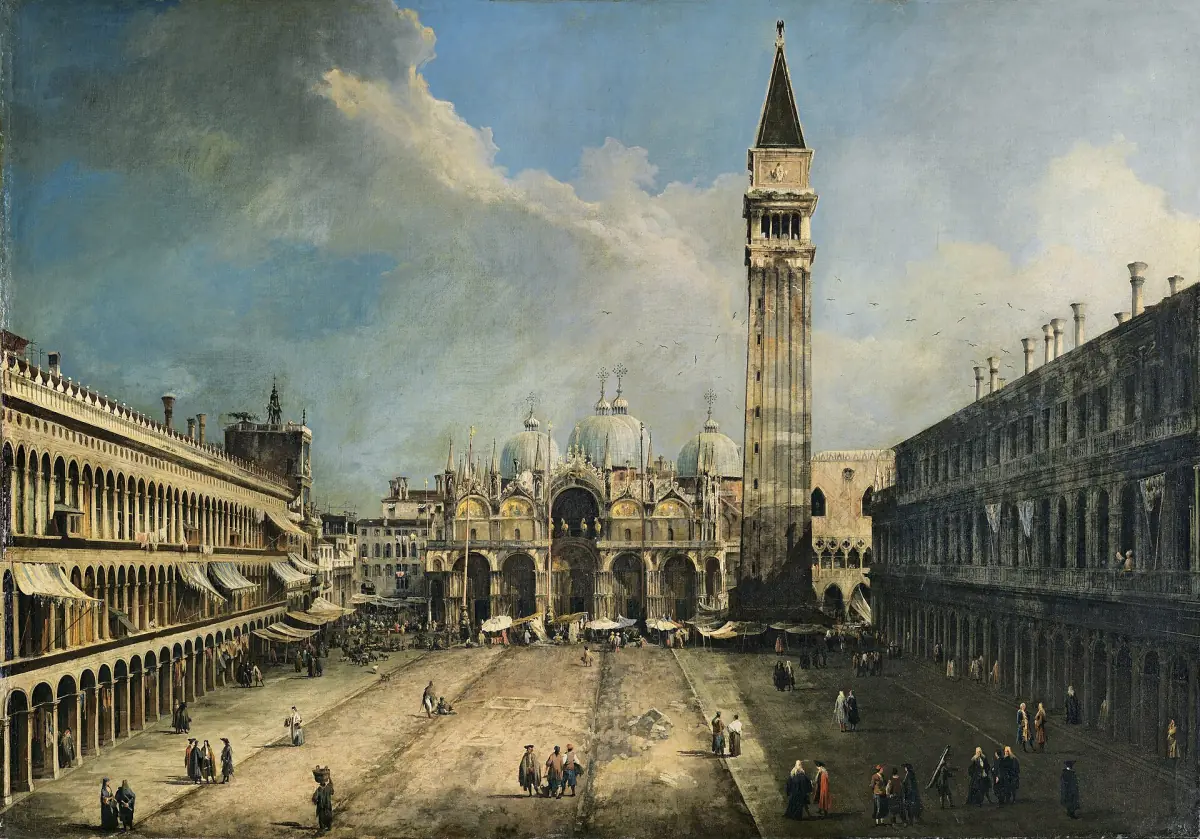
St Mark's Square in brief
The piazza was not built in one go. A historical account describes how the Rio Batario and a harbour area were filled in and the square enlarged in the 12th century. That gives a rough phase, not an exact date or exact measurements, and this page does not give one "completion day".
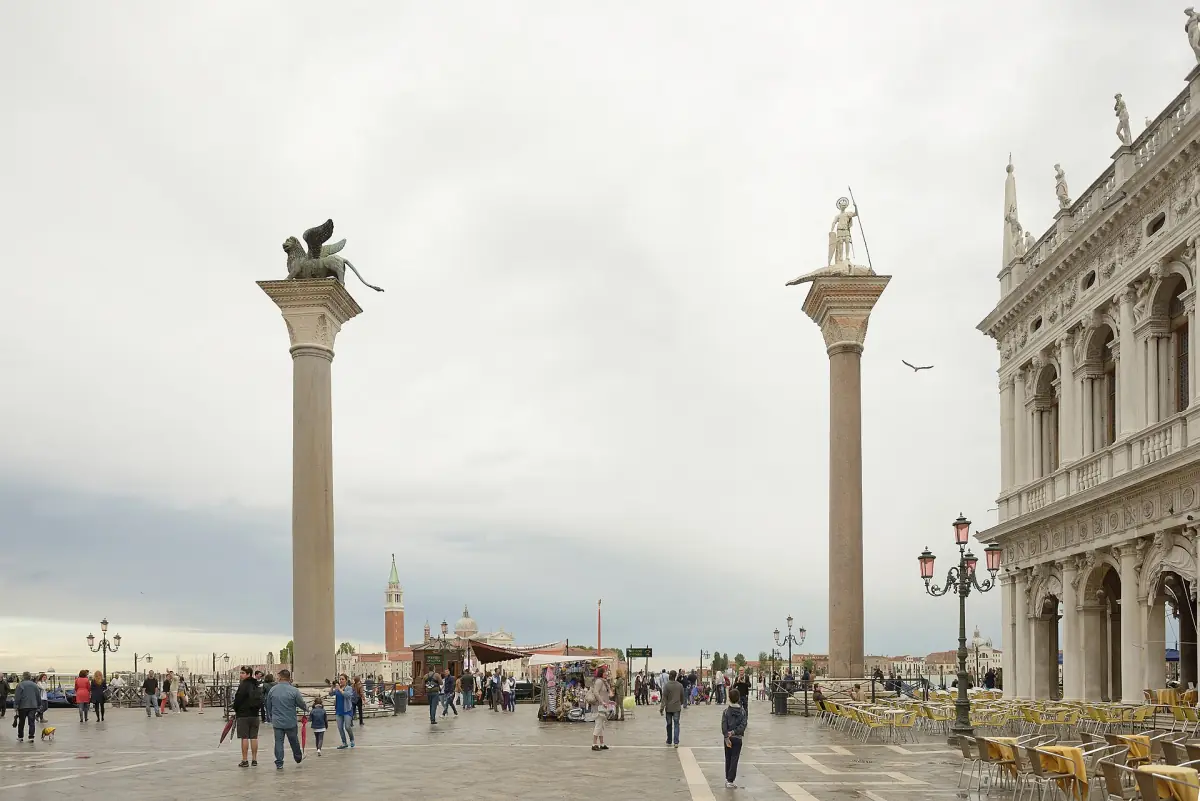
The Piazzetta is the part that meets the water near the two columns. It is not the same space as the main square. The long wings around the square, the Procuratie, came later, and so did the Ala Napoleonica at the west end.
This site is independent. It covers the square, not the basilica or the Doge's Palace, which have their own history at visitvenezia.org.
Key dates at a glance
Dates as the operators and historical accounts give them.
| Date | What happened |
|---|---|
| 12th century | Square enlarged; columns arrive from the East (about) |
| 1505 | Bronze flagpole bases cast, by tradition |
| 1514–1532 | Procuratie Vecchie, north side (one overview) |
| 1582–1640 | Procuratie Nuove, south side (one overview) |
| 1806–1814 | Ala Napoleonica planned and begun under Napoleonic rule |
| 1836 | Ala Napoleonica completed under Austrian rule |
| 14 July 1902 | Campanile collapses |
| 25 April 1912 | New Campanile inaugurated |
| 1922 | Museo Correr moves into the Ala Napoleonica and part of the Procuratie Nuove |
Tours around St Mark's Square
Walks and guided visits that explain the square, with live prices and availability.
The Procuratie wings
Long buildings with a public past.
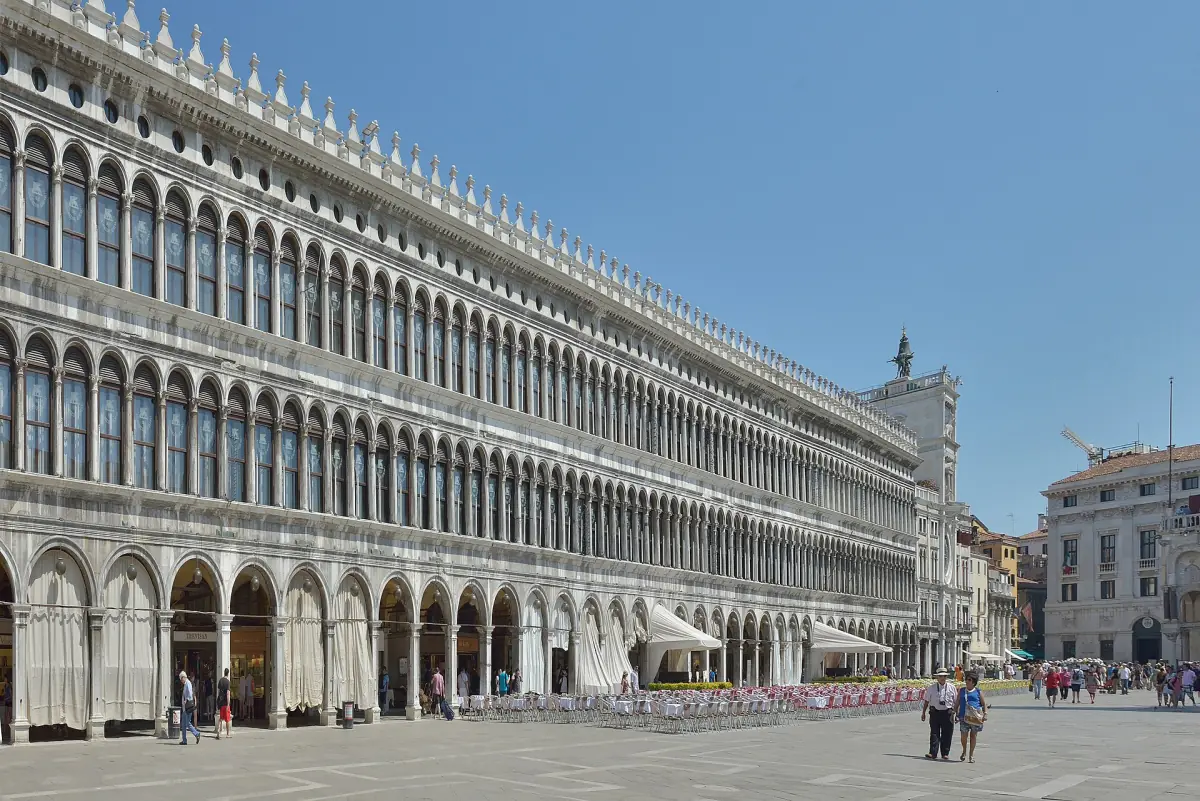
The Procuratie are long building wings that once held the offices and living quarters of high officials of the Republic. A secondary architectural overview dates the Procuratie Vecchie on the north side to 1514–1532 and the Procuratie Nuove on the south side to 1582–1640. Treat these as building phases, not as a final word on who designed what.
The wings still shape the square. Part of the Museo Correr is in the Procuratie Nuove, and Caffè Florian sits beneath them. The Procuratie Vecchie hold The Human Safety Net exhibition on the third floor, restored by David Chipperfield, with free entry and a voluntary donation.
See the Museo Correr guide for tickets and the cafés guide for the arcades.
Napoleon and the Ala Napoleonica
What he did, and what he did not finish.
A wing on the site of a church
The Ala Napoleonica was built where the church of San Geminiano and neighbouring parts of the wings stood. Planning and the start of work fall under Napoleonic rule from 1806 to 1814.
Finished by someone else
The Fondation Napoléon dates the final completion to 1836, under Austrian rule. It is wrong to say Napoleon finished the whole wing. The grand rooms and the staircase were the reason for the rebuilding.
The "drawing room of Europe"
The line is often credited to Napoleon, but no contemporary source for it is known. A different account credits a similar phrase, "salon of the world", to the poet Musset. Quote it as a saying, not as a fact.
Columns, flagpoles and the Campanile
The three things you see first from the water.
The two columns
At the water end of the Piazzetta stand the column of San Marco, in grey granite, and the column of San Teodoro (Todaro), in red granite. A restoration foundation places their arrival from the East around the 12th century and stresses that the exact origin is unclear. Treat any single origin story with caution.
The flagpole bases
Three bronze flagpole bases stand on the square. A local historical account says Alessandro Leopardi cast them in 1505 under Doge Leonardo Loredan. That account rests on a publication of 1837, so read it as tradition and not as a modern finding.
The 1902 collapse
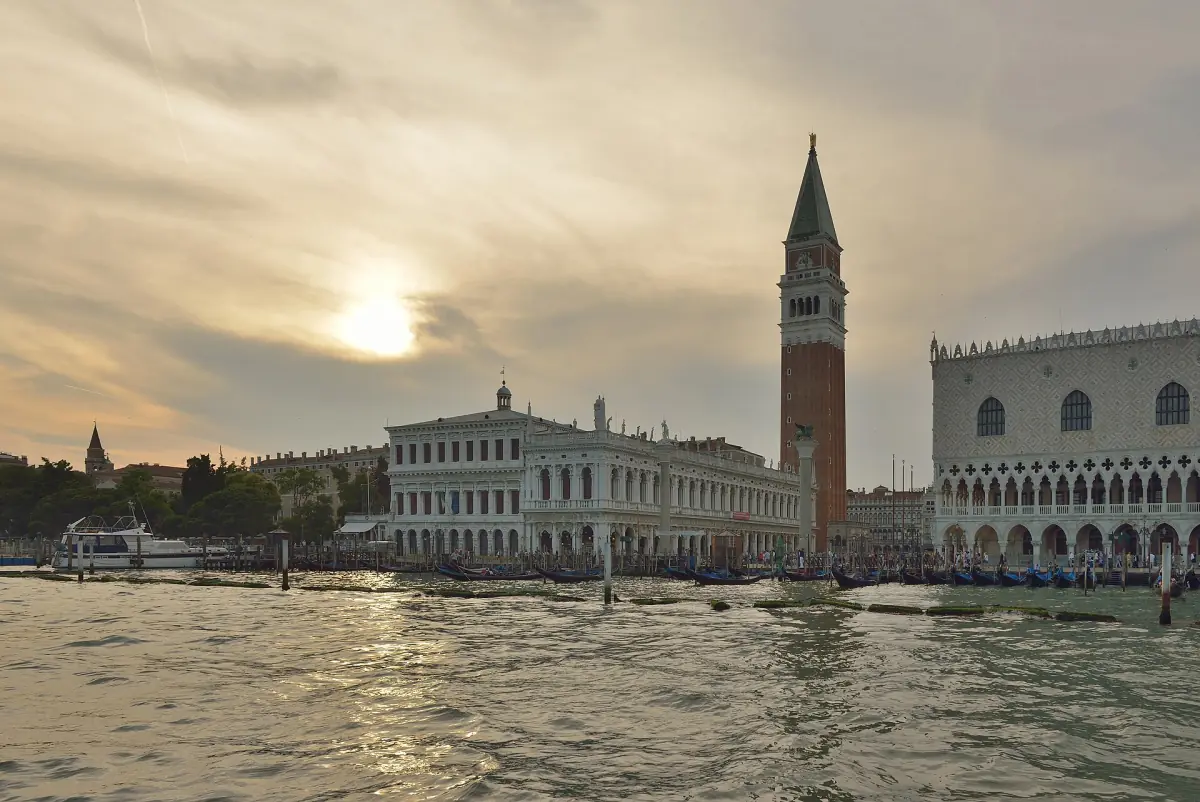
The Campanile collapsed on 14 July 1902. The operator says there were no human casualties. It was rebuilt on the same spot and inaugurated on 25 April 1912, and a lift has run since 1932.
Campanile guide →The lion
The winged lion of St Mark appears on the clock tower. Old legends tell where it came from, but none is firm enough to present as fact.
Clock tower guide →The square and the water
Floods are part of its history.
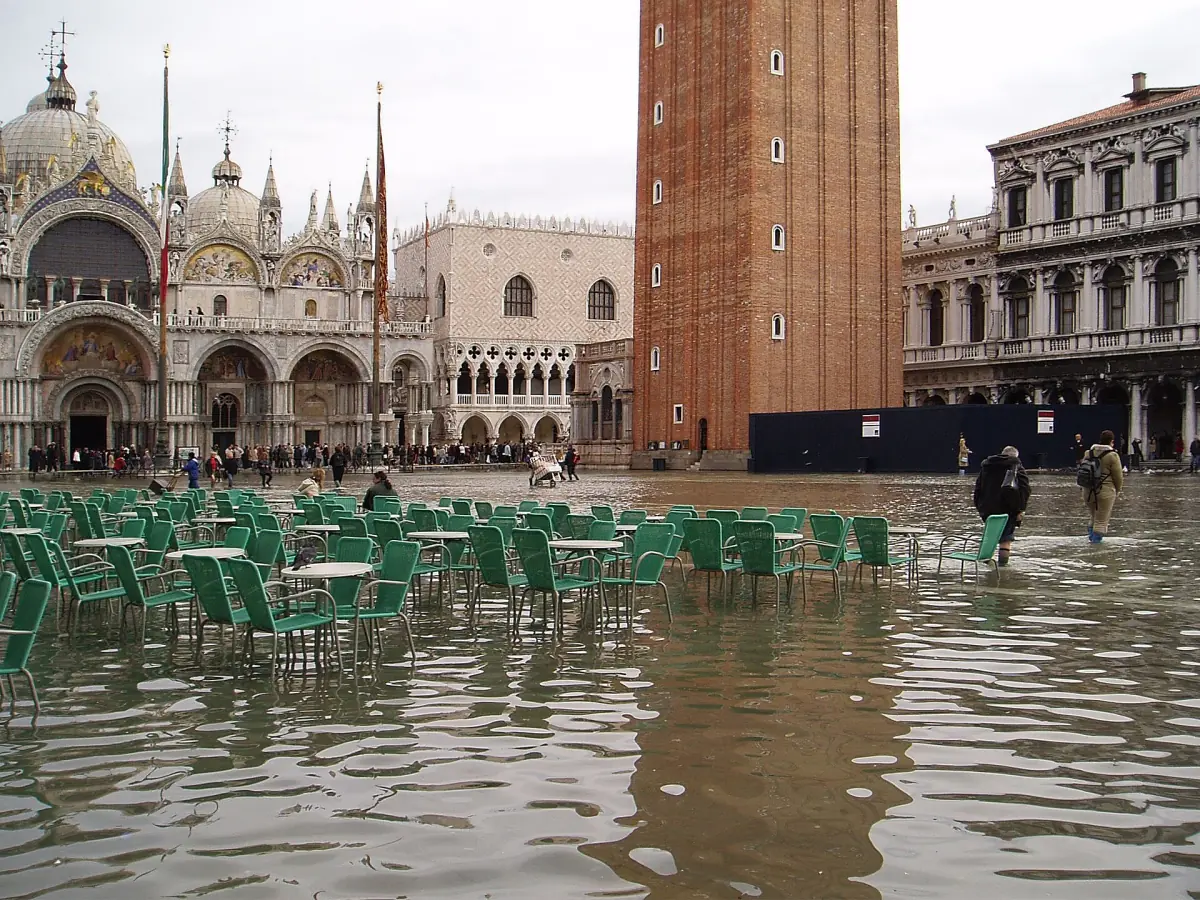
High water is part of the square's story. The MOSE barriers are raised against forecast high tides. In 2026 the lagoon authority reported 30 activations between 28 January and 20 February. A press report of 1 October 2026 describes temporary pumps in use, work on a wave barrier and a landing stage, and sealing of the Insula Marciana still unfinished.
No protection is absolute. Read the acqua alta guide for levels, sirens and walkways before you plan a visit in autumn or winter.
Keep exploring
Pick the topic that matches your visit.
History of the square: frequently asked questions
Who built St Mark's Square?
No single person did. The square grew over centuries, from a filled-in harbour area in the 12th century to the wings built between 1514 and 1640 and the Ala Napoleonica finished in 1836.
Did Napoleon build the Ala Napoleonica?
He began it. Planning and the start of work fall in 1806 to 1814, but the wing was finished in 1836 under Austrian rule.
Did Napoleon call the square the drawing room of Europe?
The line is widely credited to him, but no contemporary source for it is known. Another account credits a similar phrase to the poet Musset.
When did the Campanile collapse?
On 14 July 1902. The operator reports no human casualties. The rebuilt tower was inaugurated on 25 April 1912.
Where do the two columns come from?
A restoration foundation places their arrival from the East around the 12th century. Their exact origin is unclear.